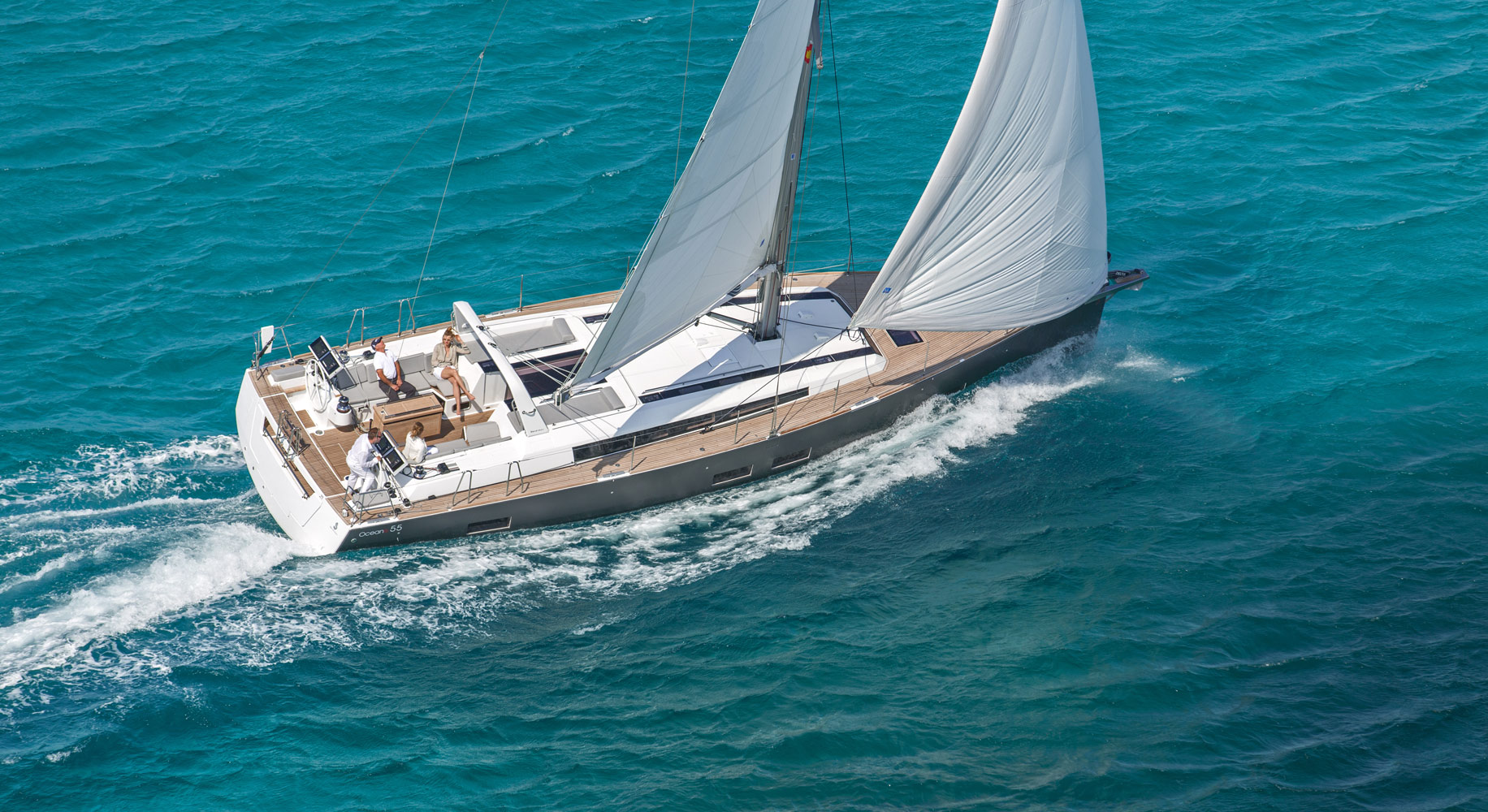

If the Cyclades are Greece in bold, the Ionian Islands are Greece in soft focus: green hills rolling down to turquoise bays, sheltered water, and short, gentle passages between wooded islands. This is the most relaxing sailing in the country, and the easiest for families and first-timers. Here is the complete guide to the Ionian, from the islands and conditions to the best routes and when to go.
Why sail the Ionian?
The Ionian’s great gift is calm. Sheltered by the islands and the nearby mainland, the water stays gentle, and the wind is a predictable afternoon breeze rather than the strong Meltemi of the Aegean. Distances are short, so you sail for a few relaxed hours and spend the rest of the day swimming, eating and exploring. Add lush green scenery, warm clear water and a string of pretty harbours, and you have the ideal cruising ground for a laid-back week. It is especially good for families, as our guide to the best family catamarans explains.
Where are the Ionian Islands?
The Ionian Islands lie off the west coast of Greece, and for sailing they divide neatly into two areas. The northern Ionian, reached from Corfu, takes in Paxos, Antipaxos and the mainland coast around Parga and Sivota. The southern Ionian, reached from Lefkas, is the busiest and best-loved cruising ground, with Meganisi, Kastos, Kalamos, Ithaca and Kefalonia clustered close together. Our guides to sailing from Lefkas and sailing from Corfu cover each in detail.
The islands
Corfu and Paxos
Corfu is elegant and green, with a UNESCO old town, while tiny Paxos charms with three pretty harbours and famous blue sea caves. Little Antipaxos, just to the south, has beaches of tropical clarity.
Lefkada and Meganisi
Lefkada is joined to the mainland by a causeway and surrounded by superb sailing water. Just offshore, Meganisi’s deep, sheltered inlets are a favourite first night for crews leaving Lefkas.
Kastos and Kalamos
These two quiet islands are the Ionian of old, with a single village each and a taverna on the quay. They are the antidote to the busier harbours and often the highlight of a trip.
Ithaca and Kefalonia
Ithaca, the legendary home of Odysseus, has the lovely harbours of Kioni and Frikes, while neighbouring Kefalonia offers the postcard village of Fiskardo, beautiful beaches and dramatic scenery.

Conditions and the afternoon breeze
The Ionian has a lovely daily rhythm. Mornings are usually calm, perfect for a swim or a slow start, then a thermal breeze builds through the afternoon, often reaching a pleasant fifteen to twenty knots from the northwest before easing in the evening. This predictable pattern means you can enjoy a proper sail each day without the sustained strong winds of the Aegean, which is exactly why the Ionian suits less experienced crews.
Sample routes
From Lefkas, a classic week loops through Meganisi, Kastos or Kalamos, Ithaca and Kefalonia, returning via Sivota. From Corfu, you sail south to the mainland bays, Parga, Paxos and Antipaxos. Both routes involve only short daily passages with plenty of time to swim. For a day-by-day plan, see our 7-day Ionian itinerary from Lefkas.
Food and harbours
Eating ashore is central to an Ionian week. Many of the best tavernas sit right on the water, some in bays reachable only by boat, and the tradition of tying up to a taverna’s own jetty for dinner is alive and well. From grilled fish in Kastos to the tavernas of Fiskardo and Sivota, the food is a highlight of every day.
When to sail the Ionian
The season runs from spring to autumn and is forgiving throughout. June and September are ideal, with warm seas, reliable afternoon wind and fewer crowds. July and August are busier and warmer but still gentle compared with the Aegean, making the Ionian a great high-summer choice for families who want calm water.
Who is the Ionian for?
The Ionian suits families, first-timers, couples and anyone who wants sailing to feel like a holiday. Experienced sailors enjoy it too, for the scenery and the easy, sociable pace. If you crave the drama and challenge of strong winds and famous Cycladic islands, the Aegean may call, but for pure, relaxed pleasure the Ionian is unbeatable.
Reaching the Ionian
The Ionian is easy to get to. Corfu has an international airport served directly from many European cities, and the southern islands are reached via Aktion (Preveza) airport, a short drive from the Lefkas base across the causeway. Both mean a short transfer to the water and a relaxed arrival day. Frequent seasonal flights make the region convenient to plan a charter around, and because it is such a popular holiday area, connections are good and often affordable.
The scenery and wildlife
What sets the Ionian apart is its greenery. Cypress and olive cover the hillsides, the water shades from turquoise to deep blue, and the light has a soft, Mediterranean warmth quite different from the stark brilliance of the Aegean. The sailing brings you close to nature: dolphins are a common sight on passage, sea turtles frequent some southern bays, and the quiet coves teem with fish for snorkellers. It is a gentler, more pastoral kind of beauty, and combined with the easy sailing it makes the Ionian feel like a green, watery idyll.
Frequently asked questions
Is the Ionian good for beginners?
Yes, it is the best cruising ground in Greece for beginners, thanks to calm water, short hops and a gentle, predictable breeze.
Should I start from Lefkas or Corfu?
Lefkas for the busy, island-packed southern Ionian, Corfu for the greener northern Ionian and Paxos. Both are wonderful and easy.
Is the Ionian calmer than the Cyclades?
Much calmer. The Ionian is sheltered with a moderate afternoon breeze, while the Cyclades face the strong summer Meltemi.
How many islands can I visit in a week?
Five or six comfortably, thanks to the short distances. There is always time to swim and linger.
Ready for the gentle Ionian? Explore the Ionian Islands destination or tell us your dates and we will plan your perfect week.