

The choice between a catamaran and a monohull shapes almost everything about a sailing holiday in Greece, from how much you spend to how well you sleep at anchor. Both are wonderful ways to explore the Aegean and the Ionian, but they suit different crews. This guide breaks down the real differences so you can book the right yacht with confidence.

The short answer
Choose a catamaran if you want space, stability, shallow-draft anchoring and comfort at anchor, and you are happy to pay more. Choose a monohull if you love the feel of sailing, want a lower budget, and do not mind a more compact interior and a boat that heels. For most families and groups of friends on a first Greek charter, a catamaran wins on comfort. For couples, sailing purists and budget-focused crews, a monohull is often the smarter pick.
Space and comfort
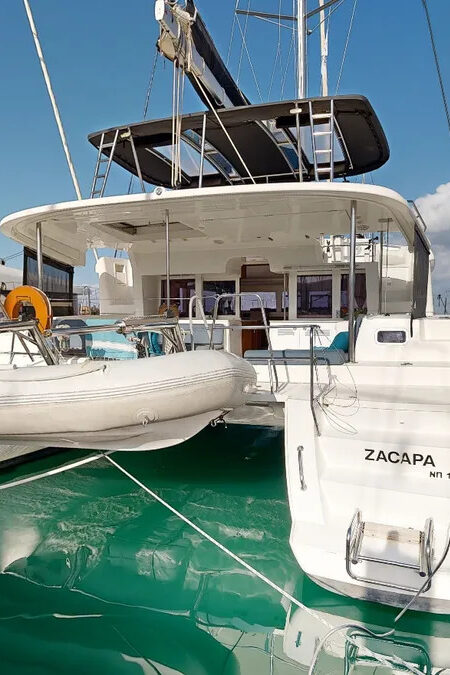
This is where catamarans shine. Because they have two hulls and a wide bridgedeck, a catamaran gives you a huge saloon, a flat cockpit that flows into the interior, and a foredeck with trampolines that becomes everyone’s favourite lounging spot. Cabins sit out in the hulls, so they feel private and separate. A group of eight on a catamaran rarely feels crowded.
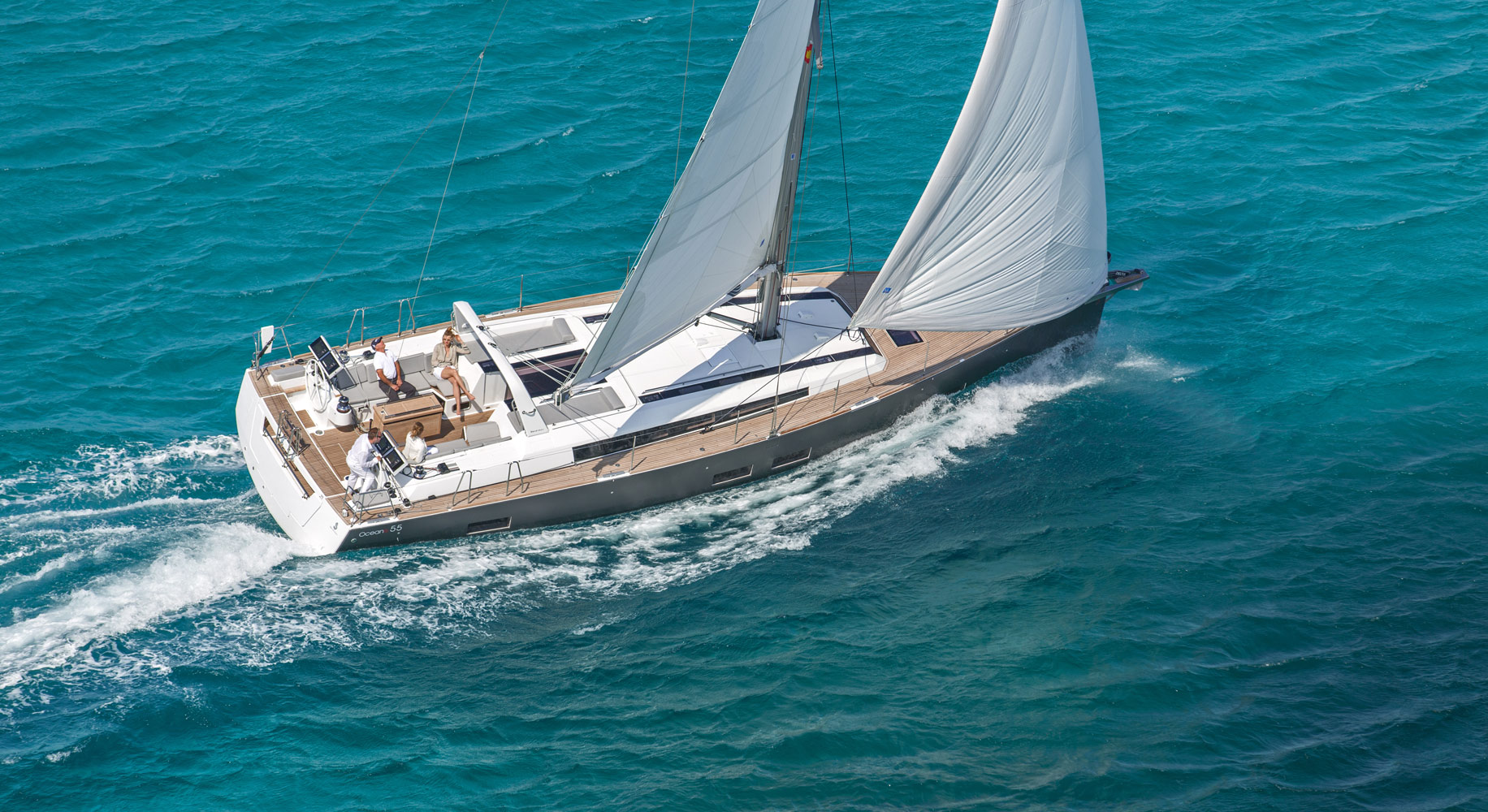
A monohull is narrower and its accommodation sits lower and closer together. You still get comfortable cabins and a cosy saloon, but the living space is more compact and social life happens in one area rather than spread across a wide deck. For a couple or a small crew that does not need much room, this is perfectly pleasant and often feels more like a classic sailing yacht should.
Stability and seasickness
A catamaran stays level. It does not heel the way a monohull does, which makes moving around, cooking and relaxing much easier, especially for children and anyone prone to seasickness. At anchor, a catamaran barely rolls, so nights are calm and sleep comes easily even in a busy bay.
A monohull heels under sail, which many sailors love because it is part of the experience, but it takes some getting used to. At anchor a monohull can roll more in swell. If half your crew has never sailed, the steady platform of a catamaran removes a lot of the anxiety from the first day or two.
The sailing feel
If sailing itself is the point of your holiday, a monohull is hard to beat. It points closer to the wind, responds crisply to the helm, and rewards trimming the sails well. In the reliable breezes of the Aegean, a good monohull is pure fun to steer.
Catamarans sail well off the wind and are fast and comfortable on a reach, but they do not point as high upwind and the sailing sensation is gentler and more relaxed. Many charterers see that as a plus, because the boat becomes a stable base for swimming and exploring rather than a machine to be raced. It comes down to whether you sail to arrive or sail for the joy of sailing.

Anchoring and where you can go
Catamarans draw very little water, often around 1.2 to 1.5 metres, so they can tuck into shallow bays and anchor close to the beach where deeper boats cannot follow. That opens up quiet corners of the Cyclades and the Ionian that feel private even in August.
Monohulls have a deeper keel, typically around 2 metres, which helps them sail upwind but keeps them a little further out. In practice both boats reach the vast majority of Greek anchorages, but the catamaran gives you a few more options in thin water and an easier time stern-to in a busy harbour.
Cost: the honest comparison
A catamaran costs more than a monohull of similar length, both to charter and in running costs. Marina fees are higher because a catamaran takes up more space, and you carry more people, so provisioning and dining out add up. As a rough guide, a catamaran can cost noticeably more per week than a monohull that sleeps the same number.
The counter-argument is cost per person. Because catamarans carry more guests in comfort, a full crew can split the higher price and still enjoy a luxurious holiday for a sensible amount each. If you are a couple, a monohull is far more economical. If you are eight friends, a catamaran can be surprisingly good value. For a full breakdown, read our guide to how much a yacht charter in Greece costs.
Which crew suits which boat?
- Families with young children: catamaran, for the space, safety and steady platform.
- Two couples or a group of friends: catamaran, so everyone gets a private cabin and room to relax.
- A couple on a romantic week: monohull, for intimacy, sailing feel and a lower budget.
- Keen sailors who want performance: monohull, every time.
- Guests worried about seasickness: catamaran, for the level ride.
- Budget-conscious crews: monohull, which stretches the holiday fund further.
Our fleet in Greece
Hellenic Yachting operates both types across four bases in Lavrion, Lefkas, Rhodes and Corfu. On the catamaran side you will find models such as the Lagoon 46, the Bali 4.2 and Fountaine Pajot cruisers. On the monohull side we run Beneteau Oceanis, Hanse and Dufour yachts among others. Browse the catamaran fleet and the monohull fleet to compare sizes and layouts, and if you are still unsure, our team will match you to the right boat.
Cost per person: a quick example
The headline price of a catamaran can look daunting until you divide it across the crew. Imagine eight friends chartering a four-cabin catamaran for a week. The higher weekly fee, split eight ways, often lands close to what a couple would each pay on a small monohull, yet everyone enjoys a private cabin, a huge deck and a level ride. The lesson is simple: judge the cost by what each guest pays, not by the sticker price. A catamaran rewards a full crew, while a monohull rewards a couple or a lean group who want the lowest total outlay.
At anchor vs under way
Think honestly about how you will spend your days. Most Greek charters involve a few hours of sailing and many more hours at anchor, swimming, eating and relaxing. If your week is mostly about the destinations and the water, the catamaran’s stable, spacious platform is a joy. If the sailing itself is the holiday, and you look forward to trimming sails on a brisk afternoon, the monohull will give you far more pleasure for the hours that matter to you.
Our verdict by trip type
- Family with kids: catamaran, for safety, space and calm nights.
- Group of six to eight friends: catamaran, for private cabins and great value per head.
- Couple: monohull, for intimacy, sailing feel and a lower price.
- Sailing enthusiasts: monohull, for performance and the pure feel of the boat.
- Special occasion or luxury week: a large crewed catamaran, for the full experience.
Frequently asked questions
Is a catamaran or a monohull better for a first sailing holiday?
For most first-timers a catamaran is easier because it stays level, barely rolls at anchor and offers more space to relax. If your crew includes experienced sailors on a budget, a monohull is a great first charter too.
Which is cheaper to charter in Greece?
A monohull is cheaper to charter and to run. A catamaran costs more overall but can work out well per person for larger groups.
Do I need a different licence for a catamaran?
No. The sailing qualifications required for bareboat charter in Greece are the same for both. Some crews take a short handover briefing to get used to manoeuvring a wider boat.
Which is more stable in the Meltemi?
A catamaran feels steadier and more comfortable, while a monohull handles strong upwind conditions confidently. Either way, we plan routes around the wind so your week stays enjoyable.
Not sure which yacht fits your crew? Tell us who is sailing and where you want to go, and we will recommend the ideal catamaran or monohull from our Greek fleet. Request a personalised quote.


2 Responses